From the Series: Daily Welfare — Meeting Needs Properly
Introduction
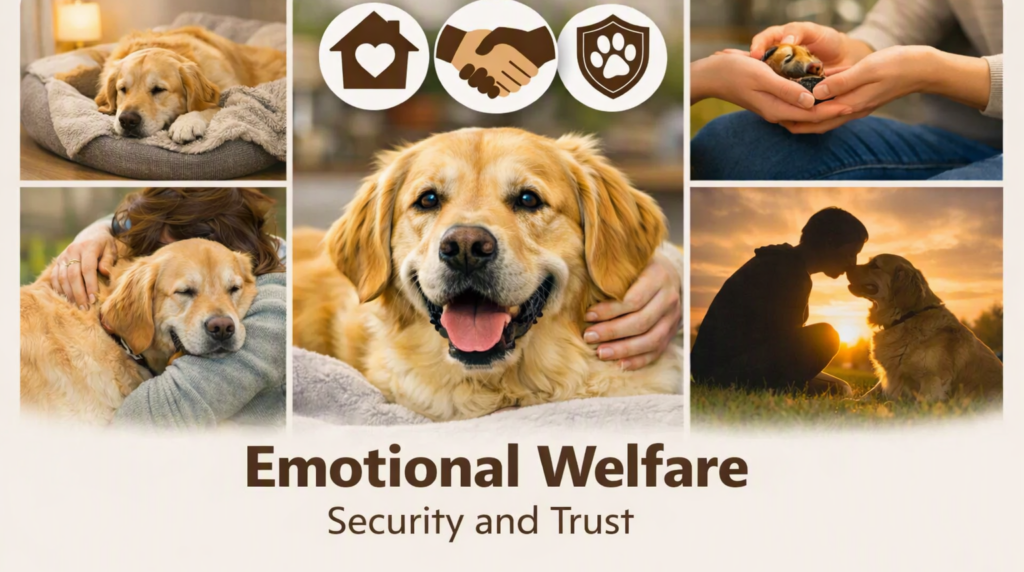
Emotional welfare is the foundation of a dog’s stability. When a dog feels safe, understood, and gently guided, every other aspect of welfare improves — behaviour, confidence, learning, and social interaction. This part explains how predictability, trust, and emotional safety shape a dog’s inner world.
1. What Emotional Welfare Means
Security as a Core Need
Dogs thrive when they know what to expect. Predictability reduces stress, prevents anxiety, and helps dogs feel anchored in their environment.
Trust as a Daily Practice
Trust is built through consistent, gentle interactions — not through dominance, intimidation, or force.
It grows when the dog learns that humans are safe, reliable, and fair.
2. Building Predictability in Daily Life
Consistent Routines
- Regular feeding times
- Predictable walk schedules
- Stable sleep and rest patterns
- Clear household rules
Consistency helps dogs relax because they don’t have to guess what will happen next.
Clear Communication
Dogs rely on body language and tone.
Calm, steady signals prevent confusion and emotional overload.
3. Gentle Handling and Emotional Safety
Respecting Boundaries
Dogs show discomfort through subtle signals: lip licking, turning away, stiffening, yawning.
Respecting these signals teaches the dog that their feelings matter.
Positive Touch and Interaction
Gentle petting, slow movements, and soft voices help dogs feel safe.
Avoid sudden grabbing, looming, or forced contact.
4. Reducing Stress and Anxiety
Identifying Stress Early
Signs include:
- Pacing
- Panting when not hot
- Hiding
- Startle responses
- Hyper‑vigilance
Creating a Safe Environment
- Quiet resting spaces
- Access to retreat areas
- Predictable interactions with family members
- Calm introductions to new experiences
5. Trust‑Building Through Positive Reinforcement
Reward‑Based Learning
Positive reinforcement strengthens the bond between dog and owner.
It teaches the dog that humans are safe partners, not sources of fear.
Choice and Control
Allowing dogs small choices — where to sniff, when to pause, how to approach — builds confidence and emotional resilience.
6. Emotional Welfare in Busy Homes
Small Daily Habits That Make a Big Difference
- Speak calmly, especially during corrections
- Avoid shouting or sudden anger
- Provide decompression time after busy periods
- Maintain predictable routines even on hectic days
- Use gentle handling during grooming and care tasks
These habits create emotional stability even in fast‑paced households.
Closing
Emotional welfare is the heart of a dog’s wellbeing. When dogs feel secure and understood, they become calmer, more confident, and more connected to their families.
Next, we move into Part 5 — Social Welfare: Interaction and Communication, where we explore how dogs build relationships, communicate needs, and thrive socially.
Related posts:

Part 1: Why Choosing a Dog Wisely Matters

Part 2 — Physical Welfare: Health, Nutrition, and Comfort

Part 3: Dog Categories and Their Implications

Dog Trainers Switch Methods Due to Empathy and Education