From the Series: ‘Daily Welfare — Meeting Needs Properly’
4. Consistency in Communication
Tone and Body Language
Use calm, steady signals.
Dogs rely on your consistency more than your words.
Predictable Responses
React the same way to similar behaviours.
Reward calmness, redirect unwanted actions — every time.
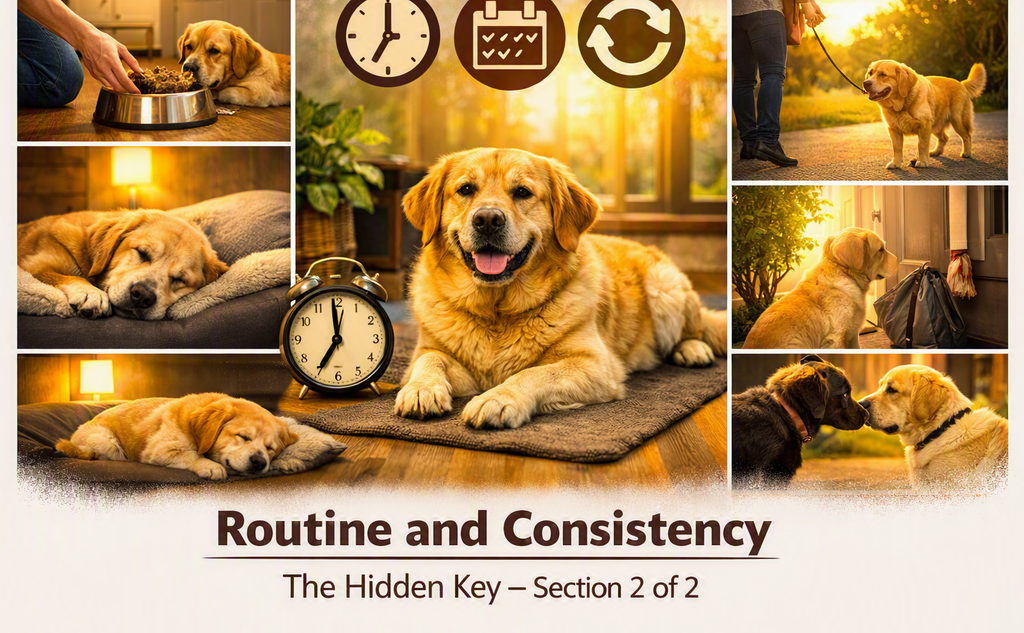
5. Routine and Behaviour Stability
Reducing Stress
Predictable routines lower cortisol levels and prevent behavioural issues.
Dogs become more confident and less reactive.
Supporting Emotional Balance
Routine gives dogs a sense of control.
They know what to expect, which reduces frustration and fear.
6. Adapting Routine for Busy Homes
Simple Adjustments
- Keep feeding and walk times consistent.
- Use visual cues (like a mat or sound) to signal transitions.
- Maintain bedtime rituals even when schedules shift.
- Rotate enrichment activities but keep timing steady.
Closing
Routine and consistency are the quiet heroes of welfare. They turn daily life into a source of comfort and trust. When dogs can rely on their environment and their humans, they flourish.
Next, we move into Part 8 — Integrating Welfare into Everyday Life, the final chapter that ties all pillars together for practical daily application. Part 8 will be available on Monday, September 14th, 2026.
Related posts:

Series Introduction: Choosing Your Dog Wisely.

Understanding Dog Punishment in China: A Canine Behaviourist’s Guide: Introduction

Part 5: Cultural Context, Compassion & The Path Forward

Part 10 — Training for Life Stages