From the Series: Daily Welfare — Meeting Needs Properly

Health Maintenance
Routine Care
- Veterinary Checks — Regular health assessments catch problems early.
- Parasite Control — Prevents discomfort and disease.
- Dental Health — Clean teeth reduce pain and infection risk.
- Grooming — Maintains skin health and comfort.
Observation and Prevention
Owners should learn to notice subtle changes — appetite, posture, coat texture, or energy levels. These are early indicators of wellbeing shifts.
2. Nutrition and Hydration
Balanced Feeding
- Quality Diet — Choose food that matches age, breed, and activity level.
- Portion Control — Prevents obesity and nutrient imbalance.
- Hydration — Fresh water available at all times.
Feeding Environment
A calm, predictable feeding space reduces stress and prevents resource guarding.
Avoid rushing meals — let dogs eat undisturbed.
3. Exercise and Movement
Physical Activity
- Daily Walks — Provide exploration and movement.
- Play — Builds muscle tone and coordination.
- Rest Periods — Recovery is as vital as activity.
Tailoring Exercise
Consider age, breed, and health.
A senior dog’s welfare depends on gentle, low-impact movement; a young working breed needs structured outlets for energy.
4. Comfort and Environment
Temperature and Shelter
- Temperature Control — Avoid overheating or chilling.
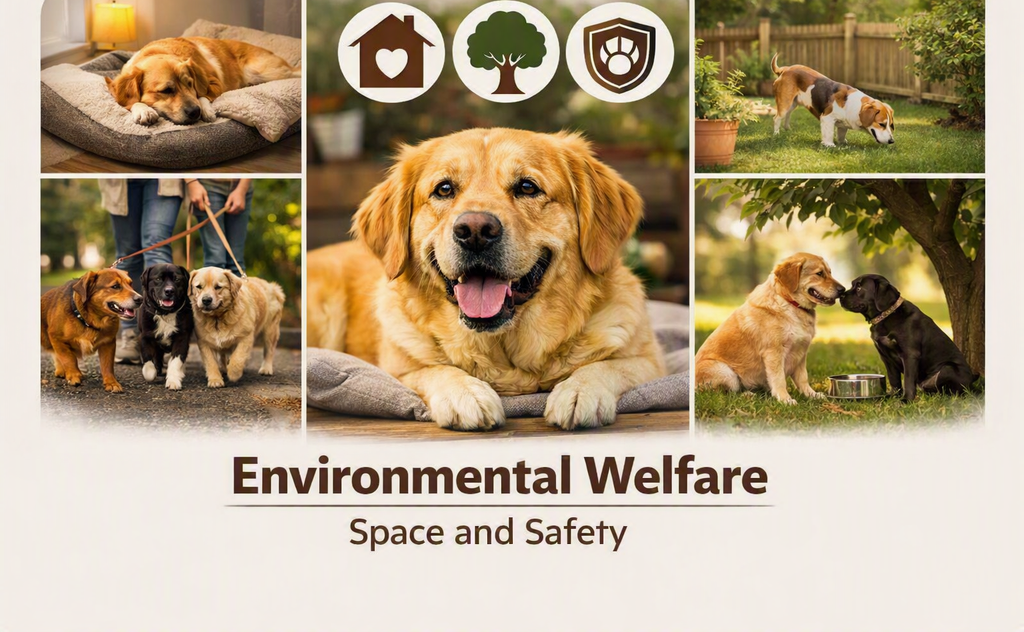
- Safe Sleeping Areas — Soft bedding, quiet space, consistent location.
- Pain-Free Living — Address joint discomfort, injuries, or chronic conditions.
Sensory Balance
Noise, light, and smell affect physical comfort.
A calm sensory environment supports rest and recovery.
5. Integrating Physical Welfare Daily
Simple Daily Practices
- Morning health check: observe posture and appetite.
- Midday hydration and short walk.
- Evening grooming or gentle massage.
- Consistent sleep routine.
These small habits build a rhythm of care that sustains wellbeing.
Closing
Physical welfare is the visible expression of love and responsibility. When owners meet these needs consistently, dogs thrive — their bodies become strong, their minds calm, and their trust deepens.
Next, we’ll move into Part 3 — Mental Welfare: Stimulation and Enrichment, exploring how to keep the mind active and fulfilled.