From the Series: Daily Welfare — Meeting Needs Properly
Introduction
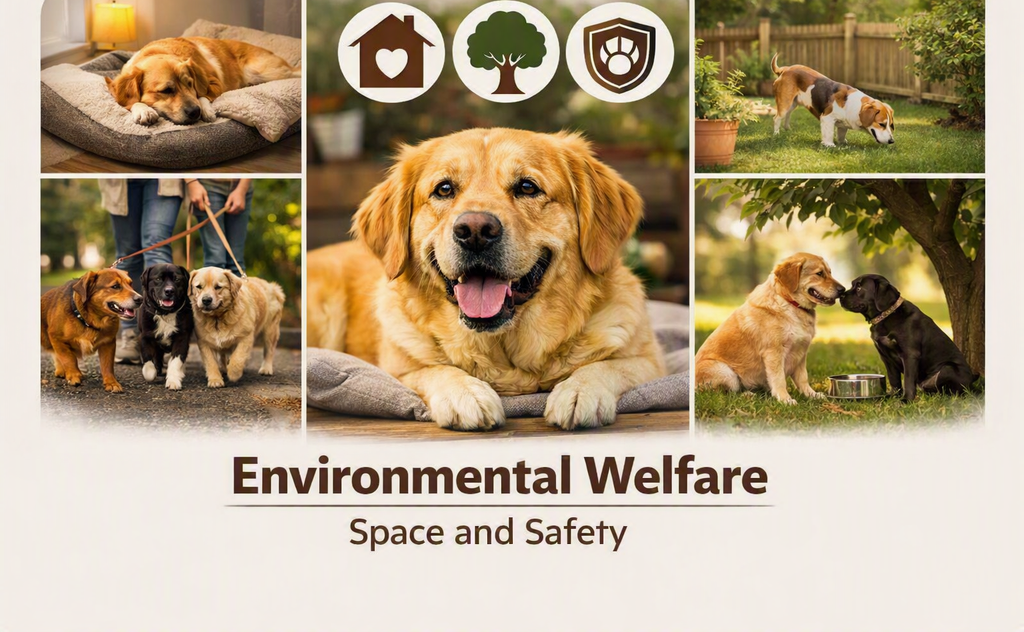
Environmental welfare ensures dogs live in spaces that are safe, comfortable, and suited to their physical and emotional needs.
A well‑designed environment prevents stress, supports health, and encourages natural behaviour.
1. Understanding Environmental Welfare
The Role of Space
Dogs need enough space to move, rest, and explore freely.
Crowded or chaotic environments can cause anxiety and frustration.
Safety as a Foundation
Safety means protection from physical harm, environmental hazards, and emotional stress.
It includes secure boundaries, temperature control, and predictable surroundings.
2. Indoor Environment
Comfort and Layout
- Provide soft bedding in quiet areas.
- Avoid slippery floors and sharp edges.
- Ensure ventilation and stable temperature.
- Keep noise levels moderate and predictable.
Safe Zones
Every dog needs a retreat space — a quiet corner where they can rest undisturbed.
This helps reduce stress and supports emotional stability.
3. Outdoor Environment
Secure Exploration
- Fenced yards or safe walking routes.
- Supervised outdoor time.
- Avoid exposure to extreme heat or cold.
- Provide shade and fresh water.
Natural Enrichment
Outdoor spaces should allow sniffing, digging, and exploration.
Natural textures and scents stimulate mental and physical wellbeing.
4. Environmental Balance
Sensory Comfort
Dogs experience the world through sight, sound, and smell.
Balance stimulation with calm — avoid overwhelming environments.
Predictability and Routine
Stable surroundings help dogs feel secure.
Sudden changes in layout or routine can cause confusion or anxiety.
5. Safety in Shared Spaces
Multi‑Dog Homes
- Separate feeding and resting areas.
- Observe for tension or resource guarding.
- Maintain clear boundaries and fair access.
Human Safety Practices
- Store cleaning products and electrical cords safely.
- Keep doors and gates secure.
- Supervise interactions with children and visitors.
6. Environmental Welfare in Busy Homes
Simple Adjustments That Make a Big Difference
- Use baby gates to create calm zones.
- Provide quiet resting areas away from activity.
- Keep walkways clear of clutter.
- Maintain consistent lighting and temperature.
- Rotate toys and bedding for freshness.
Closing
Environmental welfare shapes how dogs experience their world.
When space and safety are prioritised, dogs feel secure, relaxed, and ready to thrive.
Next, we move into Part 7 — Routine and Consistency: The Hidden Key, exploring how structure and predictability reduce stress and improve behaviour.