From the Series: Daily Welfare — Meeting Needs Properly
Introduction
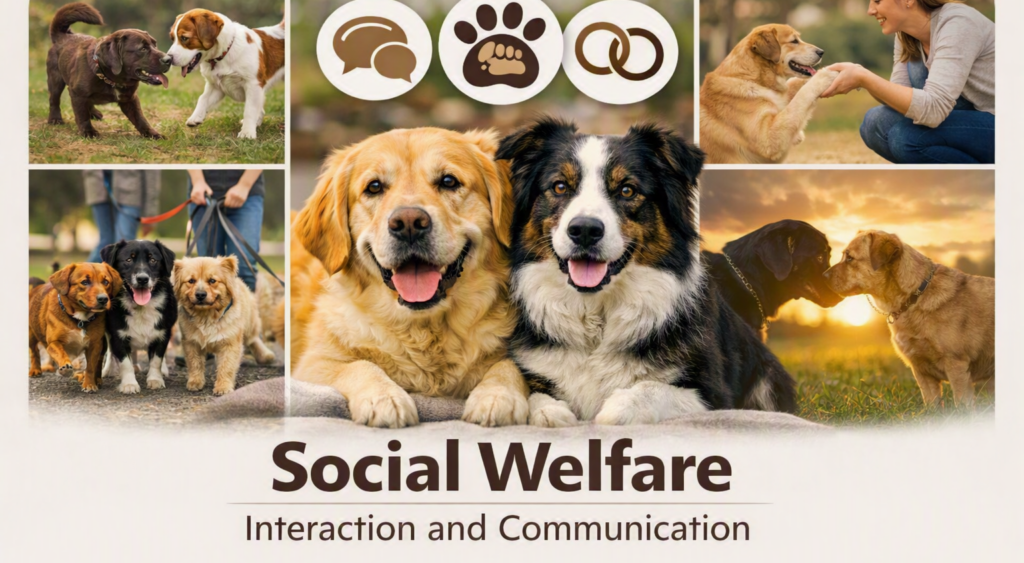
Social welfare ensures dogs can connect, communicate, and coexist peacefully with humans and other animals. It’s about understanding social signals, respecting boundaries, and nurturing positive relationships.
1. Understanding Social Welfare
Why Social Interaction Matters
Dogs are social species. Isolation or poor social experiences can lead to anxiety, frustration, or aggression.
Healthy socialisation builds confidence and emotional balance.
Communication as Connection
Dogs communicate through body language, scent, and subtle signals — not words.
Learning to read these signals prevents misunderstandings and strengthens trust.
2. Early Socialisation
Critical Periods
Puppies between 3–14 weeks are most receptive to new experiences.
Gentle exposure during this time shapes lifelong behaviour.
Safe Introductions
- Controlled, calm environments
- Positive reinforcement for curiosity
- Avoiding forced contact
- Gradual exposure to people, dogs, and environments
3. Adult Dog Social Welfare
Maintaining Social Confidence
Adult dogs still need social contact — walks, play, and calm greetings.
Avoid isolating them or limiting interaction to only one person.
Respecting Preferences
Not all dogs enjoy group play.
Social welfare means respecting individuality — some prefer quiet companionship.
4. Communication Signals
Common Dog Signals
- Relaxed posture: comfort and trust
- Play bow: invitation to interact
- Turning away: polite disengagement
- Lip licking or yawning: mild stress
- Tail position: emotional indicator
Human Communication
Dogs respond best to calm voices, gentle gestures, and consistent cues.
Avoid shouting or sudden movements — they disrupt trust.
5. Encouraging Positive Interaction
Structured Social Time
- Group walks with compatible dogs
- Controlled play sessions
- Training classes with positive reinforcement
- Calm greetings with visitors
Avoiding Over‑Socialisation
Too much exposure can overwhelm dogs.
Balance social time with rest and quiet bonding.
6. Social Welfare in Multi‑Dog Homes
Fairness and Harmony
- Equal attention and resources
- Separate feeding areas
- Individual rest spaces
- Observation for tension or competition
Conflict Prevention
Recognise early signs — stiff posture, staring, blocking access — and intervene calmly before escalation.
Closing
Social welfare completes the circle of wellbeing.
When dogs can communicate freely and feel understood, they thrive emotionally and behaviourally.
Next, we move into Part 6 — Environmental Welfare: Space and Safety, exploring how surroundings influence comfort and security. This will be published on Monday 24th August 2026.
Related posts:
Walking Your Dog Safely: The Essential Role of the Leash

“Help! My Puppy/Dog Is Urinating All Over My Apartment!” — A Clear, Calm Guide for Chinese Dog Owner...

Part 2: Common Punishments in China

Part 10 — Training for Life Stages