A Category: Family Companions
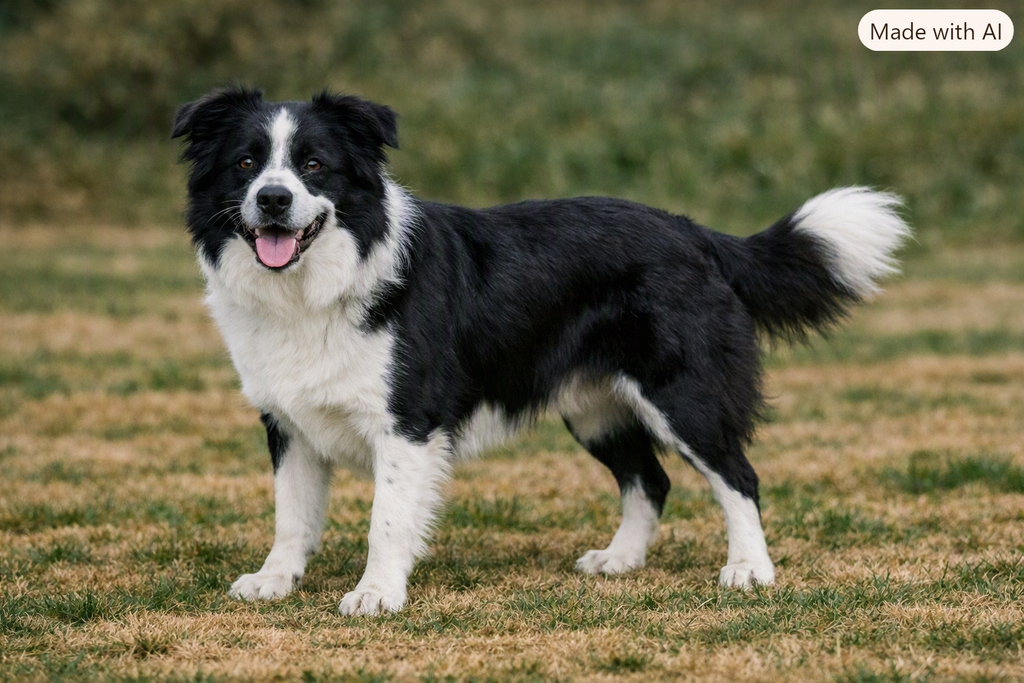
From The Global Dog Breed Compendium: A Complete Guide to 400+ Breeds Worldwide.
Also known as: Scottish Sheepdog (historical), Working Collie
Notes: “Scottish Sheepdog” was used before breed standardization. “Working Collie” is still used informally to describe active herding lines rather than show lines.
Introduction
The Border Collie is widely regarded as the most intelligent dog breed in the world, celebrated for its unmatched work ethic, agility, and responsiveness. Originally bred for herding sheep across the rugged borderlands of Scotland and England, the Border Collie combines athleticism with a sharp, problem‑solving mind. Despite its working heritage, the breed can be a devoted family companion when provided with sufficient mental and physical stimulation.
Appearance & Temperament
Border Collies have a medium‑sized, athletic frame built for speed, endurance, and agility. Their coat may be smooth or rough, appearing in black‑and‑white, red‑and‑white, blue merle, tricolour, and other variations. Their eyes are expressive and alert, often showing intense focus — known as “the Border Collie stare.”
Temperamentally, Border Collies are energetic, intelligent, and highly trainable. They thrive on structure, tasks, and interactive engagement. Their sensitivity and responsiveness make them excellent partners for active families who enjoy outdoor activities and mental challenges.
Origin & History
The Border Collie developed along the Anglo‑Scottish border, where shepherds required a dog capable of managing large flocks across harsh terrain. Selective breeding focused on intelligence, stamina, and herding instinct rather than appearance. The breed’s modern form was heavily influenced by the legendary working dog Old Hemp in the late 1800s, whose calm, controlled herding style became the foundation of today’s Border Collie.
Original Purpose
Border Collies were bred to herd sheep with precision, using eye contact, controlled movement, and strategic positioning. Their ability to anticipate flock behavior and respond instantly made them indispensable to shepherds.
Key Features Supporting That Purpose
- Exceptional intelligence and problem‑solving ability
- Strong herding instinct and “eye”
- High stamina for long working days
- Agile, athletic body suited for fast directional changes
- Strong bond with handlers and responsiveness to commands
Modern Roles
Today, Border Collies excel in:
- Herding trials
- Agility competitions
- Obedience and rally sports
- Search and rescue
- Canine performance sports
- Active family homes with structured routines
Their versatility makes them one of the most capable working and sporting breeds worldwide.
Suitability for Owners
Border Collies are best suited for active families, sport enthusiasts, or individuals who enjoy training and outdoor activities. They thrive in environments where they receive daily mental challenges and physical exercise. While affectionate and gentle, they may become bored or anxious without sufficient stimulation.
Daily Life With This Breed
A Border Collie’s day should include structured exercise, interactive play, and training sessions. They enjoy fetch, frisbee, agility courses, puzzle toys, and herding‑style games. Without adequate engagement, they may develop unwanted behaviors such as excessive barking, chasing, or restlessness.
Challenges & Care Considerations
- Extremely high mental and physical needs
- Can become anxious or destructive if understimulated
- Strong herding instinct may lead to chasing children or pets
- Requires consistent training and clear boundaries
- Needs regular grooming depending on coat type
With proper care, Border Collies are extraordinary companions — loyal, intelligent, and deeply connected to their families.
Author’s Note
This profile is part of A Category: Family Companions, the first section of The Global Dog Breed Compendium: A Complete Guide to 400+ Breeds Worldwide (H1). Links will become active once each breed post is published.
© 2026 Wayne Viviers — www.wayneviviers.com. All rights reserved. This article and all associated content are original intellectual property belonging to Wayne Viviers. No part of this publication may be reproduced, copied, stored, shared, republished, or transmitted in any form — including digital formats, electronic devices, online platforms, offline media, or any other medium — without prior written permission from the author. For permission requests, please contact: info@wayneviviers.com