A Category: Family Companions
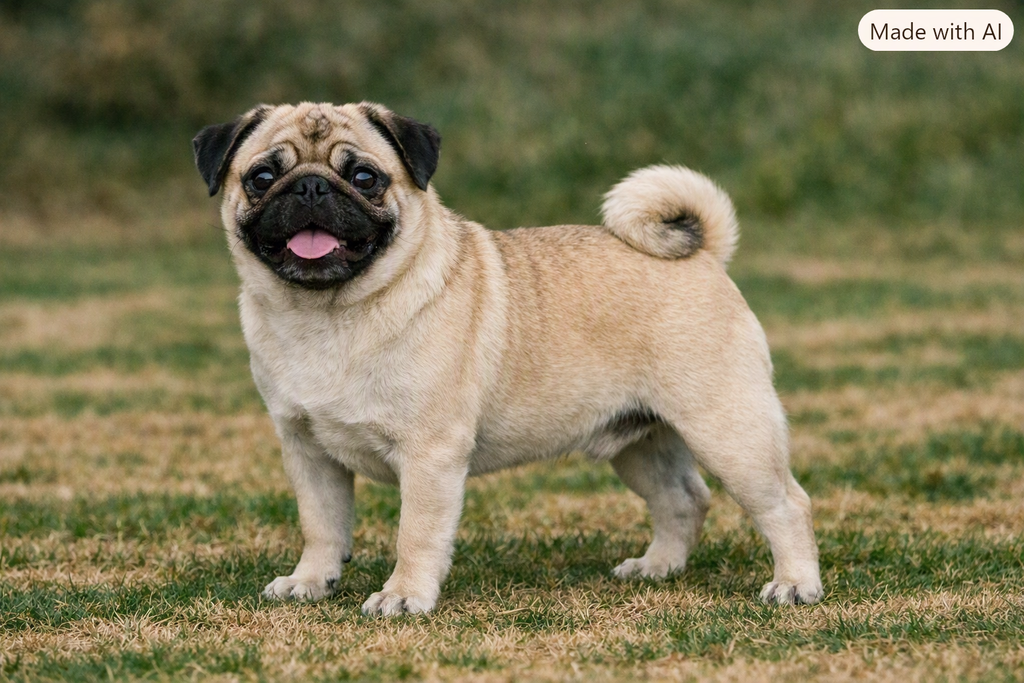
From The Global Dog Breed Compendium: A Complete Guide to 400+ Breeds Worldwide.
Also known as: Mops (Germany), Carlin (France)
Notes: These names come from local dialects describing the dog’s expressive, wrinkled face — “Mops” meaning “grimace” and “Carlin” referencing a famous French actor known for similar facial expressions.
Introduction
The Pug is a small, sturdy, and affectionate companion dog celebrated for its charming personality and distinctive wrinkled face. With its compact build, curled tail, and soulful eyes, the Pug has been adored for centuries as a symbol of loyalty and humor. Despite its small size, it carries a big personality — playful, loving, and endlessly entertaining.
Appearance & Temperament
Pugs have a short, square body with a smooth, glossy coat that comes in fawn, apricot, silver, or black. Their large, round eyes and deep facial wrinkles give them a unique, expressive look. The tail curls tightly over the hip, and their gait is confident and jaunty.
Temperamentally, Pugs are affectionate, mischievous, and sociable. They thrive on human companionship and are happiest when included in family activities. Their even temperament and gentle nature make them excellent pets for children and seniors alike.
Origin & History
The Pug’s origins trace back over 2,000 years to ancient China, where they were bred as lapdogs for emperors. They were prized for their distinctive appearance and calm disposition. The breed later spread to Europe through trade routes in the 16th century, becoming a favorite among royal families — notably in the Netherlands and England.
Original Purpose
Pugs were bred primarily as companions for nobility and scholars. Their small size and affectionate nature made them ideal indoor dogs, valued for their loyalty and charm rather than working ability.
Key Features Supporting That Purpose
- Compact, sturdy body suitable for indoor living
- Gentle, affectionate temperament
- Expressive face that encourages emotional connection
- Minimal exercise requirements
- Adaptability to various household environments
Modern Roles
Today, Pugs continue their legacy as beloved family pets and social companions. They are popular in urban settings due to their small size and adaptability. Pugs also serve as therapy dogs thanks to their calm demeanor and ability to bond deeply with people.
Suitability for Owners
Pugs are ideal for families, singles, and seniors seeking a loyal, low‑maintenance companion. They enjoy moderate activity but are equally content lounging indoors. Their affectionate nature makes them perfect for apartment living or smaller homes.
Daily Life With This Breed
A Pug’s day should include short walks, playtime, and plenty of affection. They love interactive toys and thrive on attention. Because of their flat faces, Pugs should avoid strenuous exercise or extreme heat. They are happiest when they can be near their owners throughout the day.
Challenges & Care Considerations
- Prone to breathing difficulties (brachycephalic syndrome)
- Sensitive to heat and humidity
- Requires regular cleaning of facial wrinkles
- Can gain weight easily — monitor diet and exercise
With proper care, Pugs live long, joyful lives filled with companionship and laughter.
Author’s Note
This profile is part of A Category: Family Companions, the first section of The Global Dog Breed Compendium: A Complete Guide to 400+ Breeds Worldwide (H1).
Links will become active once each breed post is published.
© 2026 Wayne Viviers — www.wayneviviers.com. All rights reserved. This article and all associated content are original intellectual property belonging to Wayne Viviers. No part of this publication may be reproduced, copied, stored, shared, republished, or transmitted in any form — including digital formats, electronic devices, online platforms, offline media, or any other medium — without prior written permission from the author. For permission requests, please contact: info@wayneviviers.com